
Oregon Fossil Fuel Risk Bonds
John Talberth • October 20, 2026
Legislative priorities for 2027
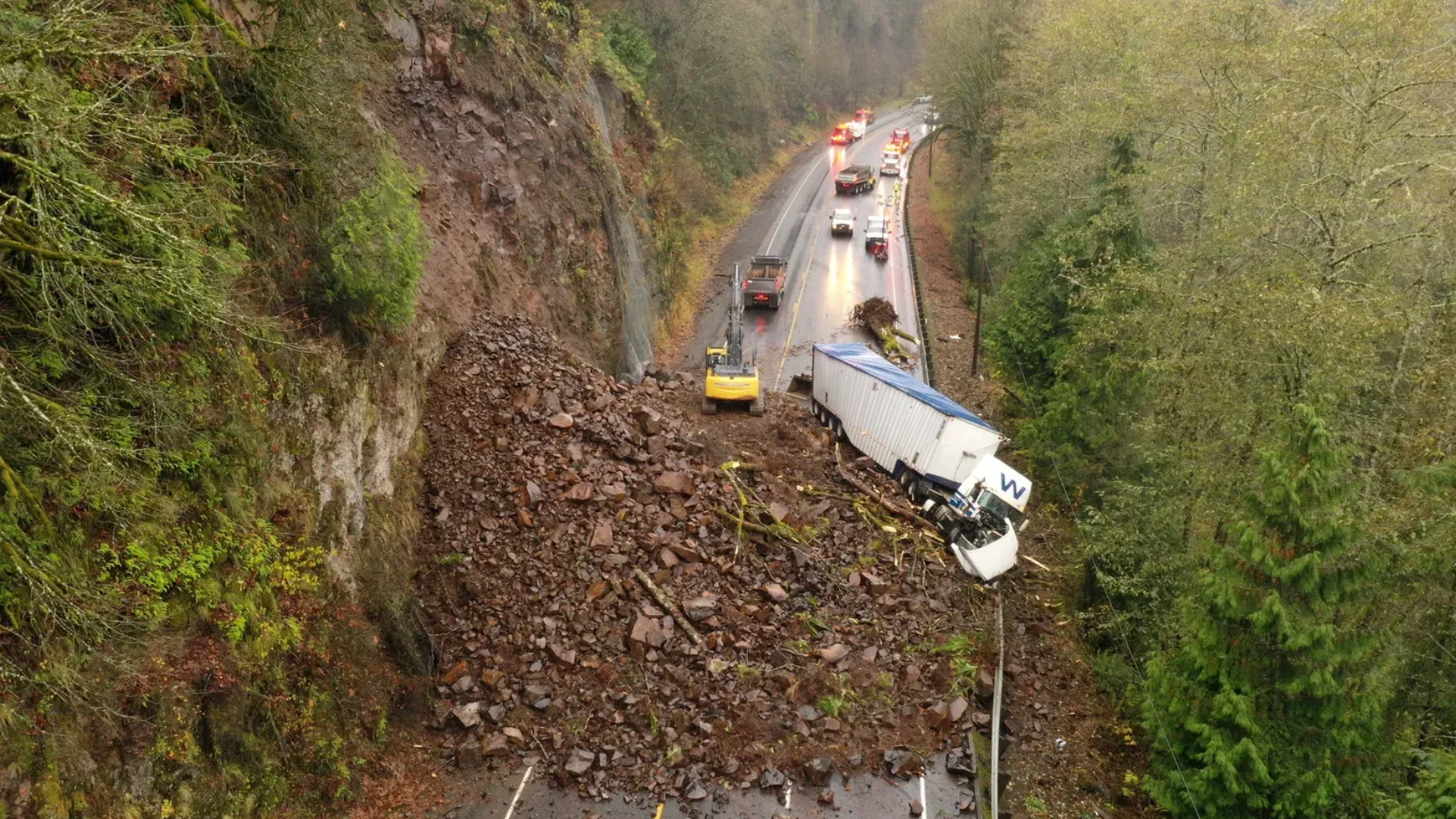
CSE’s fossil fuel risk bond program continues to enjoy broad-based support in Oregon and Washington. Last spring, the Oregon Legislature adopted HB 4100, which requires that owners of large fossil fuel infrastructure facilities in Multnomah, Columbia and Lane Counties provide evidence of financial responsibility for worst-case spills and explosions to ensure that polluters, not taxpayers, foot the bill for disaster response and clean up. While HB 4100 was a big step forward in implementing the full fossil fuel risk bond program vision, significant gaps remain. In 2027, the Oregon Legislative Assembly has the opportunity to fill those gaps through companion legislation to advance two components of the fossil fuel risk bond concept not yet addressed: decommissioning bonds and a surcharge-based approach for funding climate adaptation. CSE and This Land are laying the groundwork for legislation on both.
Decommissioning Bonds for Energy Facilities
As the transition to renewable energy accelerates, there is a growing need to ensure that sites occupied by fossil fuel facilities – like storage tanks and pipelines – are decommissioned in an orderly and timely way in order to free up affected lands for beneficial uses in the future. Corporate owners of these facilities often go bankrupt or vanish through mergers and acquisitions when time for closure comes around and simply abandon their infrastructure, leaving taxpayers to foot the bill. For example, across the US and Canada, abandonment of gas pipelines – some constructed before 1970 – leaves communities and landowners exposed to a litany of risks associated with contaminated soils, sinkholes, and serious threats to water supply.
While Oregon has decommissioning bond requirements on the books for large energy facilities, wave energy facilities, underground storage tanks, and hazardous waste sites, these do not apply to many risky energy facilities like the storage tanks in Portland's Critical Energy Infrastructure Hub, most natural gas distribution pipelines, co-generation power plants and biogas facilities that merely supplement, and not replace, natural gas.
To remedy these omissions, CSE and This Land have drafted model legislation for consideration during the 2027 session. The proposed Decommissioning Bonds for Energy Facilities Act would require that owners of covered facilities – facilities not currently regulated by the Energy Facility Siting Council (EFSC), bulk oils or liquid fuels storage facilities, and several types of biogas facilities – obtain certificates of financial responsibility from EFSC demonstrate that they have the financial resources set aside to cover all costs related to decommissioning, clean-up, and site restoration. Having this important component of fossil fuel risk bond programs on the books will help expedite the closure of existing facilities and disincentivize the construction of new ones while preventing taxpayers from having to pay the bill for costly clean up and restoration activities.
Climate Adaptation Trust Funds
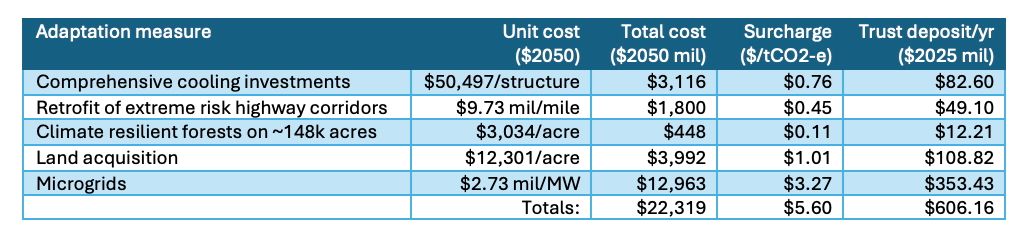
As described in a 2025 report from the Forum on Oregon Climate Change Economics (FORCE), Oregon remains unprepared for the costs of climate change because there is little or no dedicated funding for big ticket climate adaptation projects like cooling centers, sea walls and dikes, microgrids, highway retrofits and acquisition and restoration of lands needed to buffer communities against wildfires, floods, and water shortages. As the FORCE report demonstrates, a modest surcharge on carbon-intensive goods would provide billions of dollars in funding for these investments when they are needed. If the money is collected now and deposited in trust fund accounts, it would grow with interest and thus make the overall cost of adaptation line items cheaper than they would be if agencies waited to secure the funding just as these projects are needed.
The table below, extracted from the FORCE report, shows what level of surcharge is needed to raise adequate funds by 2050 for five major adaptation measures. The report found that a surcharge of $5.60 per metric ton on all major sources of greenhouse gas pollution in the state, including both biogenic (i.e. timber and methane from cattle) and fossil fuel sources, would be enough to raise over $22 billion in dedicated funding for adaptation by 2050 with annual trust fund deposits of about $600 million.
CSE and This Land have drafted model legislation to operationalize this approach for consideration during the 2027 legislative session. The legislation would put a $5.00 per metric ton CO2 surcharge on the wholesale trade of fossil fuels, industrial timber, and products from concentrated animal feedlot operations and deposit revenues into one of two trust fund accounts – a Transportation Adaptation Fund capitalized by the surcharge on motor vehicle fuel (as required by Article IX of the constitution) and a Climate Adaptation Trust Fund capitalized by surcharges on other fossil fuels, industrial timber, and CAFO products.
The Department of Revenue and Department of Land Conservation and Development would oversee this program and be tasked with issuing and updating rules that would add or remove commodities subject to the surcharge, modify emissions factors for such commodities, and modify surcharge amounts based on periodic adaptation cost assessments conducted by DLCD that specify target funding levels for adaptation measures identified by public agencies statewide.
As the 2027 legislative session approaches, CSE and This Land will be reaching out to all legislators who care about climate, care about taxpayer liabilities for abandoned fossil fuel infrastructure, and care about raising the funds needed for climate adaptation to encourage the leadership necessary to get these measures introduced and passed.