
Ecosystem Services in Decision Making
John Talberth • October 6, 2026
A case study of Island County, Washington
READ OR DOWNLOAD THE FULL REPORT HERE
Every time a public agency makes a decision to protect or sacrifice natural areas to development there is almost always a gaping hole in the information considered in the planning process – the economic value of the tradeoffs. In an era of fiscal stress at every level of government this is not a trivial omission. Development comes with costs, and it’s important to understand what those are and how to minimize the losses.
The concept of ecosystem services was developed, in part, to help fill this void. Ecosystem services are the economic benefits nature provides for free, such as flood control, aquifer recharge, control of pests and diseases, regulation of climate and provision of sites for recreational and cultural uses. When natural areas are lost to development, the annual stream of ecosystem services they provide are permanently lost.
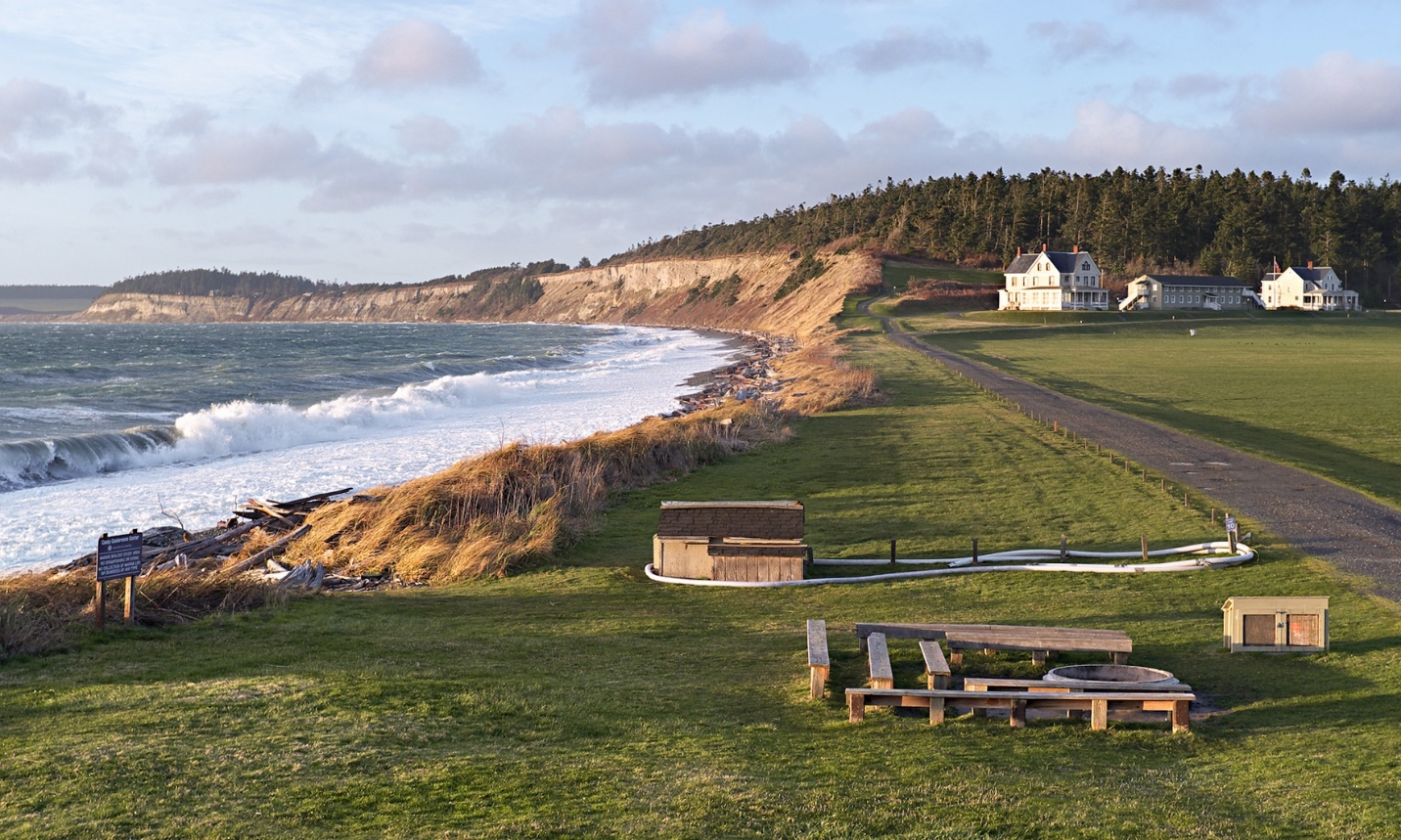
In a new report prepared for the Whidbey Environmental Action Network, CSE developed a proposal for integrating ecosystem services into six planning and land use decision making processes in Island County, Washington, which encompasses two major islands – Whidbey and Camano. Those decision-making processes include:
- No-net-loss – a policy to ensure that development does not reduce the value of ecosystem services provided by critical areas and shorelines.
- Natural area investments – such as the acquisition of open space or money spent on ecological restoration. Ecosystem service valuation here would help ensure that such investments more than break even from a benefit-cost standpoint.
- Public benefit rating system – a program that assigns scores to parcels proposed for protection and reduced property taxes and based, in part, on the ecosystem services such parcels provide to the county.
- Conservation futures – an annual grant program for preserving unique or distinctive lands. Ecosystem service values can play a major role here by providing an objective way to prioritize grant funding.
- Comprehensive planning for economic development – Island County’s comprehensive plan recognizes that natural areas are not just resources to be managed, but “vital assets that provide ecosystem services, recreation, and climate resilience for current and future residents.”
- Aquifer protection - All of Island County has been designated as a Critical Aquifer Recharge Area since the U S Environmental Protection Agency designated Island County with “sole source aquifer” status in 1982. Ecosystem service valuation can be used to identify natural lands with the highest aquifer recharge values.
In addition to discussing how ecosystem services can be integrated into these planning process, the CSE report provides an overview of the concept and quantification methods as well as updated estimates of ecosystem service values from three relevant studies prepared by Earth Economics and the Federal Emergency Management Agency. The table below provides updated estimates from FEMA.
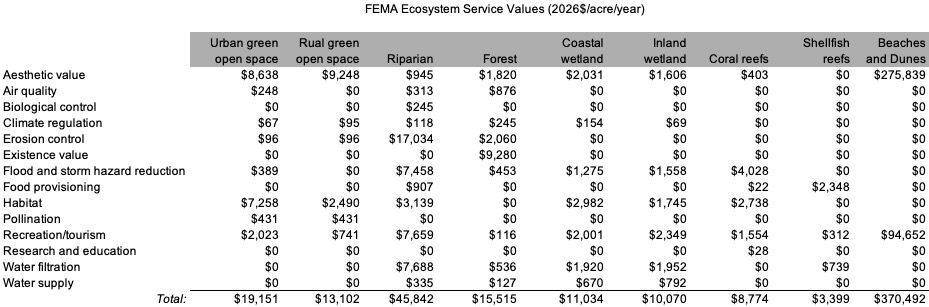
While existing data and studies are useful, they omit many categories of ecosystem services and need to be calibrated to better fit the unique economic profile of Island County. For example, in the FEMA table, a $0 value does not mean that these ecosystem services are zero but that not enough information exists to make an estimate. CSE’s report ends by recommending an investment of about $300,000 by the county and non-profit partners to complete a study that will fill in these holes, represent the best available science and generate values that are reliable, accurate, verifiable, and legally defensible. CSE and its partners will be working over the next several months to further refine the scope of work for this research and identify potential funding sources.